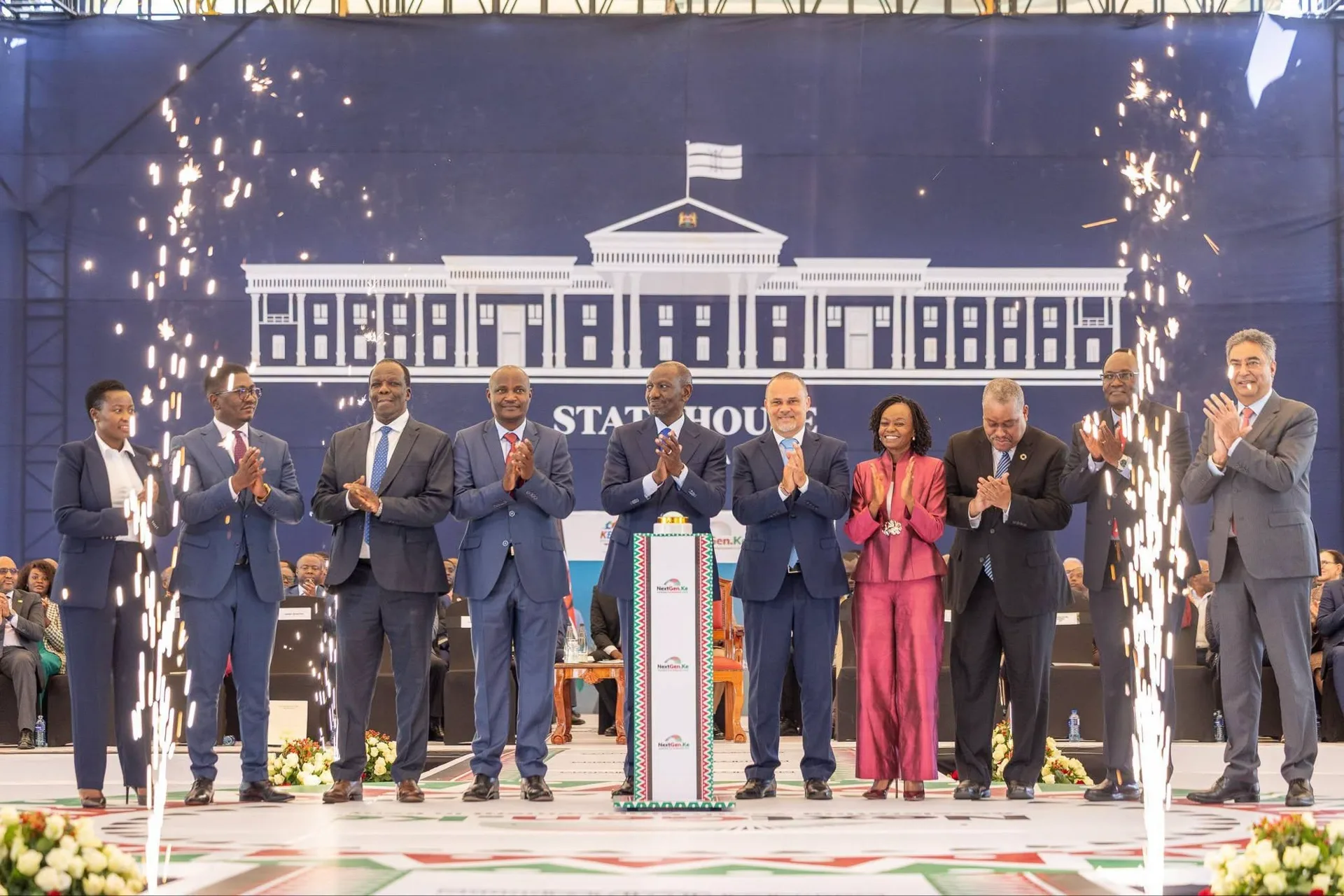
President William Ruto on Friday launched the Next Generation of Kenya Youth Employment Programme (NextGen.KE) at State House, Nairobi, in a bid to tackle youth unemployment through a Ksh2 billion government-backed initiative.
The multi-agency programme aims to bridge the gap between education and employment for thousands of young Kenyans, targeting an initial 30,000 beneficiaries with plans to scale up to 100,000 over the next three years.
NextGen.KE was developed in partnership with the United Nations Development Programme (UNDP), the Kenya Private Sector Alliance (KEPSA) and strategic private sector partners.
The initiative combines direct job placement with structured skills development across two main pillars. Stipend-supported internships will see 15,000 university and Technical and Vocational Education and Training (TVET) graduates placed in one-year paid internships within top private-sector companies. A further 15,000 beneficiaries will undergo workplace readiness and skills training focused on entrepreneurship, financial literacy, life skills and workplace integration.
Selection will span degree, diploma and certificate holders from universities and TVET institutions nationwide, with organisers saying the approach is designed to ensure equitable access.
Speaking at the launch, President Ruto described internships as strategic investments in national human capital rather than temporary labour stopgaps.
"Internships are not simply temporary jobs or stepping stones. They are the bridge between learning and earning, between potential and performance, and between ambition and achievement," Ruto said.
The President said the Ksh2 billion allocation, drawn from the government's development budget, reflects confidence in the potential of Kenya's youth and the country's future.
The programme is aligned with Kenya's Bottom-Up Economic Transformation Agenda (BETA) and Vision 2030, and leans on private sector expertise to address structural employment gaps.
KEPSA Chief Executive Officer Carole Kariuki and UNDP Resident Representative Jean-Luc Stalon said active corporate participation would be essential to ensure training matches real-world labour market demand.
Corporate partners, including major infrastructure and service firms, have pledged financial and mentorship support to help cohorts through supervised workplace learning and career placement.
With close to one million young Kenyans entering the labour market each year, organisers describe NextGen.KE as a scalable, market-driven framework intended to convert academic potential into long-term economic productivity.
By Benedict Aoya



Reader Discussion (0)
Sign in to comment