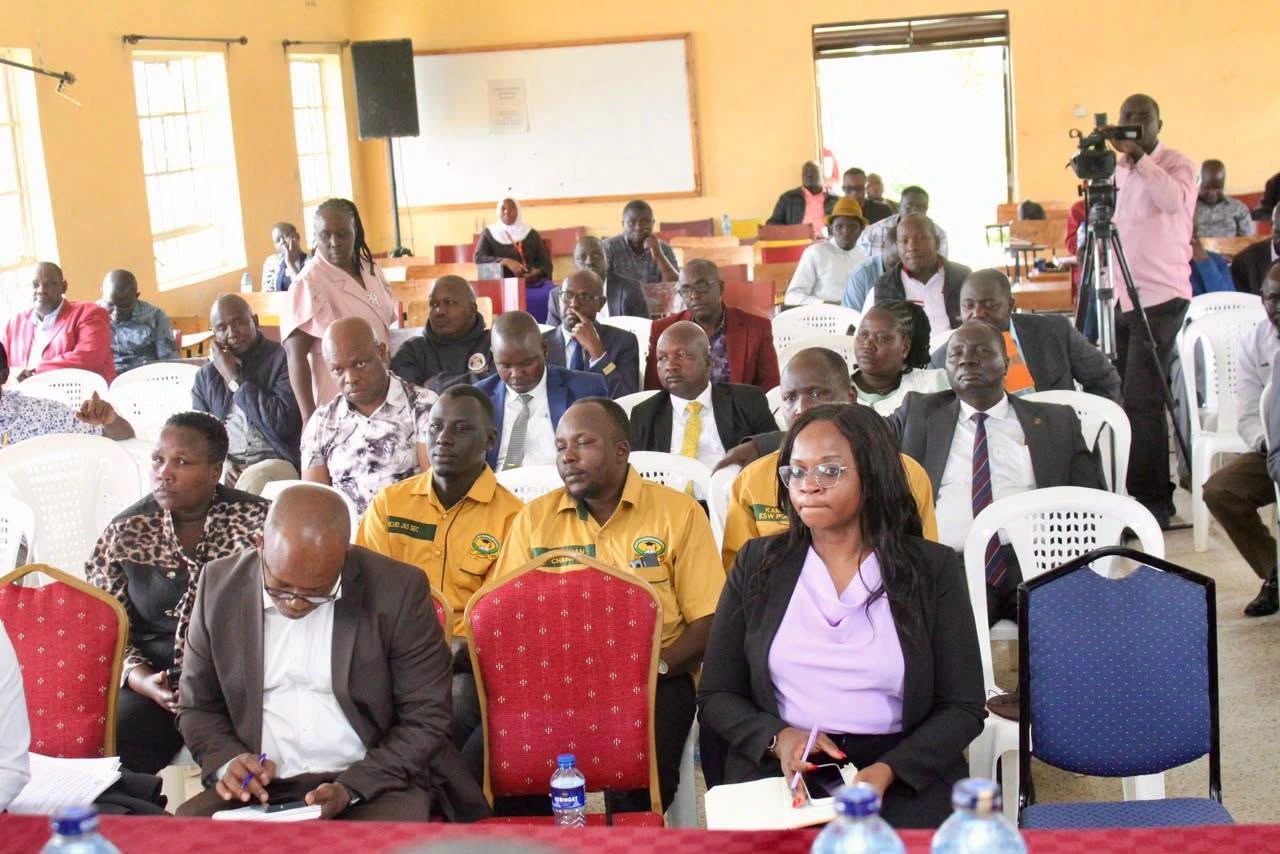
- KUPPET and KNUT in West Pokot County have differed over the proposed autonomy and management of Junior Schools during public participation on education laws.
- KUPPET has called for Junior Schools to be autonomous and headed by degree holders with secondary options, while KNUT has opposed separation to ensure smooth learner transition.
- Students from KMTC Kapenguria have also proposed changes to HELB loan repayment terms, saying deductions should start after employment.
The Kenya Union of Post Primary Education Teachers (KUPPET) and the Kenya National Union of Teachers (KNUT) in West Pokot County have differed over the proposed management and autonomy of Junior Schools (JS).
The disagreement emerged during a public participation exercise by the National Assembly Committee on Education on proposed education legislation.
KUPPET is pushing for Junior Schools to be made autonomous from primary schools and managed by teachers trained to handle post-primary-level learners.
In his opening remarks, Baringo North MP and committee member Hon Joseph Makilap urged stakeholders to submit proposals that would strengthen the proposed laws.
"These laws will affect education right from pre-primary to university level. I urge you to make your proposals to amend or oppose with a solution and cure," Makilap said.
KUPPET argued that teachers appointed to supervise, appraise and mentor others should possess qualifications relevant to the level they manage.
The union's West Pokot Executive Secretary, Alfred Kamuto, said teachers holding P1 certificates, diplomas in primary education or ECDE qualifications should not be placed in charge of teachers trained at degree level with secondary teaching options.
According to Kamuto, the head of a Junior School should be a degree holder with a secondary teaching option and not simply any degree holder.
"It is therefore our humble request that JS be domiciled within the primary school compound but shall be autonomous and that it be led by a post-primary teacher," Kamuto said.
However, KNUT opposed the separation of Junior Schools from primary schools, backing the Presidential Working Party on Education Reform's recommendation on comprehensive schools.
KNUT West Pokot Executive Secretary Dorcus Lotimen said keeping the institutions together would promote smooth transition for learners and encourage teachers across different levels to share expertise.
"These schools should not be separated so that learners can have a smooth transition from one level to another and so that our teachers can share knowledge they have with those in JS and Primary school to curb the knowledge gaps," Lotimen said.
The public participation exercise also heard submissions from students and representatives of tertiary institutions on the proposed Tertiary Education, Placement and Funding Bill, 2026.
KMTC Kapenguria Campus called for provisions that would guarantee equitable access to financing for students pursuing medical training, citing the distinctive costs and practical nature of health-professional education.
The students also proposed changes to the proposed Higher Education Loans Board (HELB) repayment provisions. They argued that loan repayment should not automatically begin one year after completion of studies because graduates may not have secured employment by then.
KMTC Kapenguria President Andrew Pkemoi proposed that repayment should only begin once a graduate secures formal or informal employment.
"It is not a guarantee that after one year of graduating one gets employed. So, repayment would be subject to when one gets formal or informal employment," Pkemoi said.
He further proposed deducting 4 per cent of a loanee's basic salary towards loan repayment, instead of the proposed provision allowing deductions of up to 25 per cent of an employee's emoluments.
The National Assembly Committee on Education is currently in the third week of public participation on six education-related Bills.
They include the Tertiary Education, Placement and Funding Bill, 2026; Pre-Service Education and In-Service Training Bill, 2026; Basic Education (Amendment) Bill, 2026; Kenya Institute of Curriculum Development (Amendment) Bill, 2026; Kenya National Educational Assessments Council Bill, 2026; and Kenya National Qualifications Framework (Amendment) Bill, 2026.
The committee is expected to consider views submitted by education stakeholders and members of the public as it processes the proposed legislation.
Reader Discussion (0)
Sign in to comment